Introduction Of Flexibility Quiz:
Ever wondered how flexible you really are? Flexibility ain’t just for gymnasts, yoga fans, or athletes. It’s honestly something pretty much everyone needs, whether you’re playing with your kids, reaching for that top shelf, or just trying to feel good in your own body. But let’s be real – most of us have no clue where we stand when it comes to our mobility.
That’s where a flexibility quiz comes in handy. Not only is it fun and quick to do, but it also gives you a bit of a wake-up call about your body’s strengths and weaknesses. A good flexibility test can help you spot tight spots, prevent injuries, and even boost your overall fitness game. And don’t worry, you don’t need fancy equipment or a personal trainer for this – you can simply take a flexibility self test right at home.
In this blog, we’ll cover what flexibility actually is, why it matters, how to test yourself, and most importantly – how to get better at it! Ready to find out if you’re bendy, stiff, or somewhere in between? Let’s jump in.
What Is Flexibility?
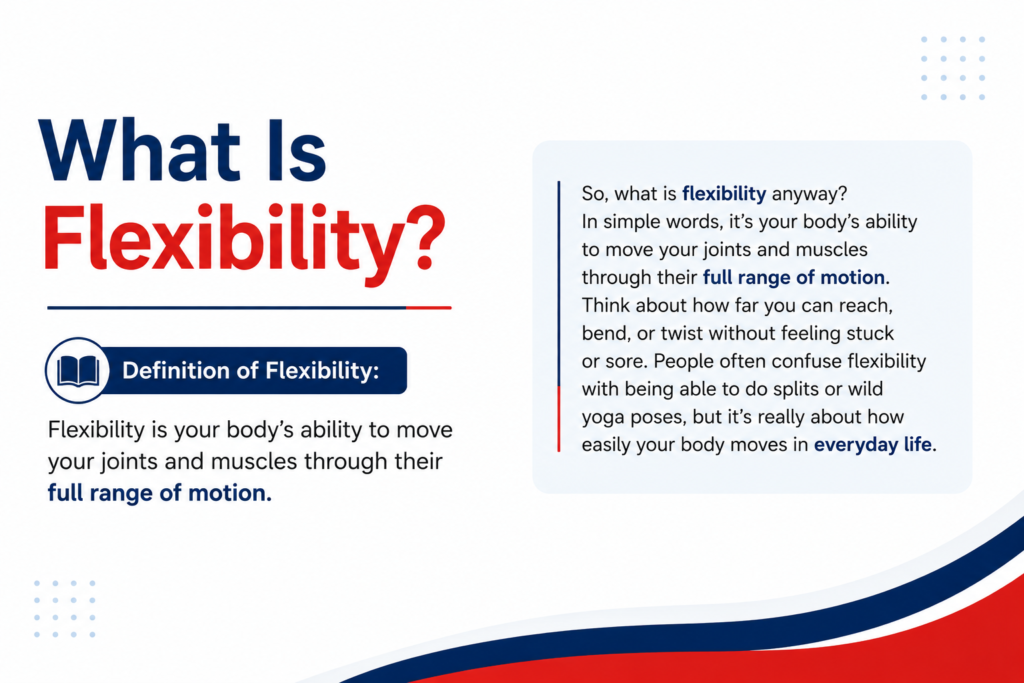
Definition of Flexibility:
So, what is flexibility anyway? In simple words, it’s your body’s abillity to move your joints and muscles through their full range of motion. Think about how far you can reach, bend, or twist without feeling stuck or sore. People often confuse flexibility with being able to do splits or wild yoga poses, but it’s really about how easily your body moves in everyday life.
Range of Motion Explained:
Range of motion, or ROM, basically means how much movement a joint has. For example, can your shoulders go in a full circle or do they feel tight when you try? If your mobility is limited, it usually means something’s tight – maybe your muscles, tendons, or even the joint itself.
Role of Muscles and Joints:
Your muscles, ligaments, and tendons work together with your joints to create movement. If one part is tight or weak, it messes with your flexibility assessment. That’s why sometimes you’ll ace a mobility quiz for your legs but totally fail when it comes to your shoulders.
Why Flexibility Is Important:
Without enough flexibility, even basic stuff like tying your shoes or sitting cross-legged can get tricky or uncomfortable. Plus, you’re more likely to pull a muscle or tweak something if your body isn’t moving as it should.
Benefits of Good Flexibility:
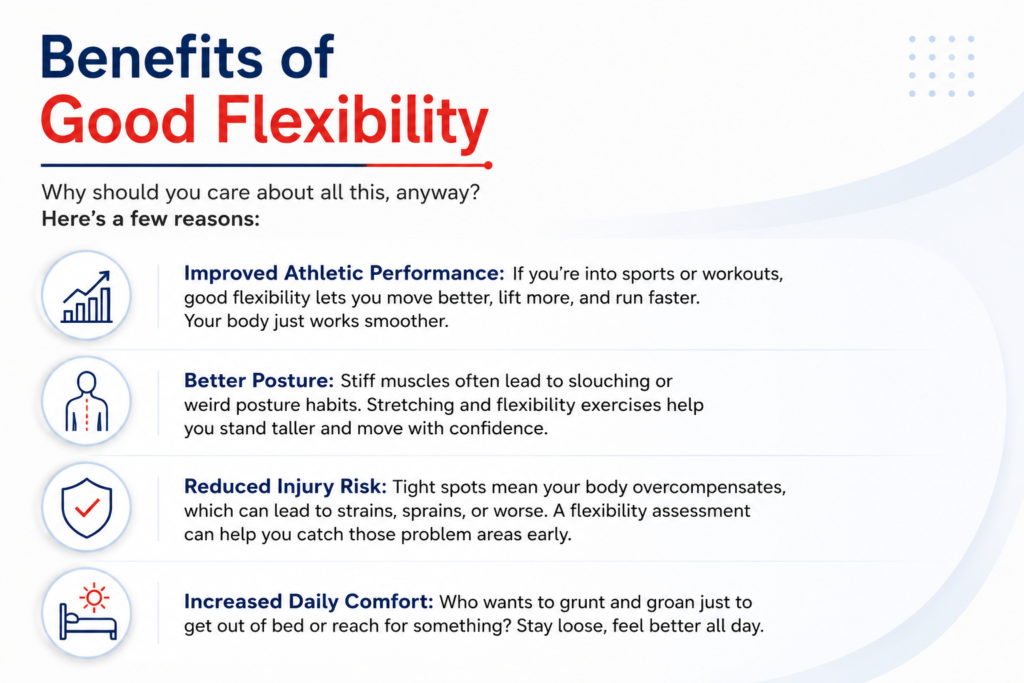
Why should you care about all this, anyway? Here’s a few reasons:
- Improved Athletic Performance: If you’re into sports or workouts, good flexibility lets you move better, lift more, and run faster. Your body just works smoother.
- Better Posture: Stiff muscles often lead to slouching or weird posture habits. Stretching and flexibility exercises help you stand taller and move with confidence.
- Reduced Injury Risk: Tight spots mean your body overcompensates, which can lead to strains, sprains, or worse. A flexibility assessment can help you catch those problem areas early.
- Increased Daily Comfort: Who wants to grunt and groan just to get out of bed or reach for something? Stay loose, feel better all day.
Factors That Affect Flexibility:
Not everyone is born with the same bendiness. Here’s what can affect your range of motion:
- Age: Kids are bendy! As we get older, our muscles and joints get stiffer — it’s just nature, but you can slow it down.
- Genetics: Some folks are naturally loose-jointed, while others are stiff as a board. Can’t change your genes, but you can still improve!
- Activity Level: If you move a lot, you’ll stay loose. Sitting at a desk all day? That’s when things start to tighten up.
- Stretching Habits: Regular stretching keeps your muscles long and limber. If you never stretch, don’t be surprised if you fail the flexibility challenge.
- Hydration and Recovery: Muscles need water and rest! Dehydration and overdoing it will make you stiffer.
Flexibility Quiz: Easy Self-Assessment
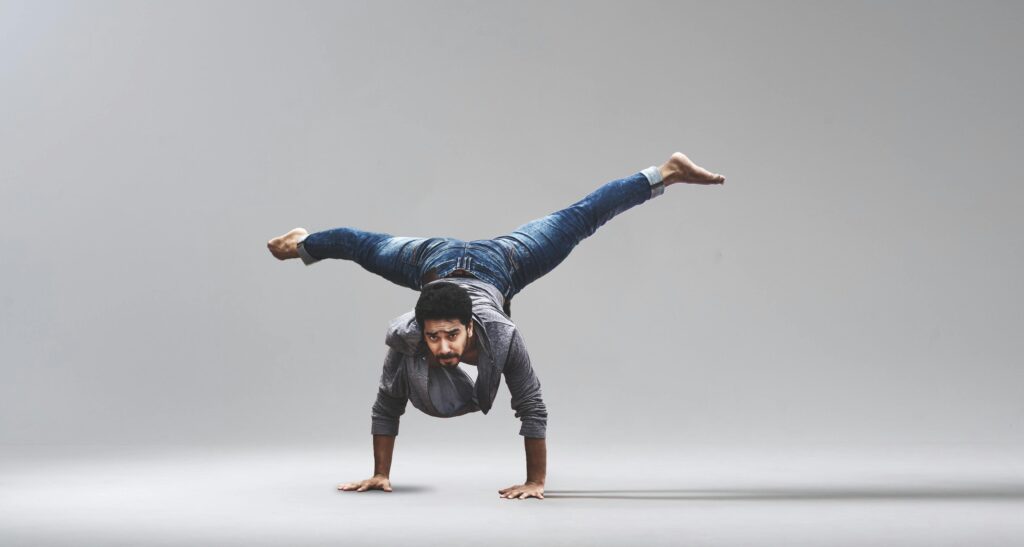
Alright, time for the fun part: the flexibility quiz! Grab a pen or just keep count in your head.
Flexibility Quiz Questions:
Score yourself: 1 point for each “Yes” answer.
- Can you touch your toes without bending your knees?
- When you squat, can you keep your heels flat on the ground?
- Can you clasp your hands behind your back, one over the shoulder, one up the back?
- Can you sit cross-legged comfortably for 2+ minutes?
- Lying on your back, can you lift your straight leg to 90°?
- Can you do a full shoulder circle without pain or tightness?
- Can you twist your torso to look directly behind you, both sides?
- Can you do a deep lunge with your back knee almost touching the floor?
- Can you kneel and lean back to touch your heels?
- Can you reach your hand between your shoulder blades from above and below?
- Can you sit with your legs straight and touch your shins or feet?
- Can you stand and pull your heel to your butt without tipping over?
- Can you lay flat and bring your knee to your chest?
- Can you clasp your fingers together in both directions (right over left, left over right) behind your back?
- Can you stand with feet together and squat all the way down without falling backwards?
- Can you get up from the floor without using your hands?
- When you do a side bend, can you reach past your knee?
- Can you spread your legs wide and lean forward, touching the floor?
- Can you do a straight-legged hamstring stretch and touch your toes?
- Can you balance on one foot for 30 seconds without wobbling?
Scoring:
- 0-5 points: Beginner
- 6-10 points: Average
- 11-15 points: Good
- 16-20 points: Excellent
Understanding Your Flexibility Score:

Beginner (0–5 points):
Your flexibility could really use some work, but hey, everyone starts somewhere! Focus on daily stretching and gentle movement.
Average (6–10 points):
You’re doing alright, but you probably feel stiff in certain areas. Try adding some mobility exercises or yoga into your routine.
Good (11–15 points):
Nice! You’ve got above-average flexibility. Keep it up with regular stretching and maybe try a new fitness challenge.
Excellent (16–20 points):
Wow, you’re basically a human rubber band! Keep maintaining your range of motion and maybe help a friend get bendier too.
Common Areas of Limited Flexibility:
Most folks have trouble in these spots – you’re not alone:
- Hamstrings: Back of the thighs. If these are tight, touching your toes can feel impossible.
- Hips: Stiff hips can make sitting cross-legged or deep squats hard.
- Shoulders: Can you reach behind your back or do overhead moves easily?
- Lower Back: Stiffness here can cause all sorts of issues, even pain.
- Ankles: Poor ankle flexibility makes squatting or certain sports tricky.
If you scored low in any of these on the body flexibility test or range of motion quiz, focus your stretching here.
Mobility vs Flexibility: What’s the Difference?
People mix these up all the time. Here’s the breakdown:
- Flexibility: How far your muscles can stretch.
- Mobility: How well your joints can move through their full motion, with control.
They’re closely related, but not the same. You might have flexible muscles but poor mobility if your joints or control aren’t up to par.
Why Both Matter:
Good mobility and flexibility together mean you move well, feel good, and avoid injuries. That’s why both show up in any decent mobility assessment or mobility quiz.
Simple Tests to Measure Flexibility:
Try these quick tests at home:
Toe Touch Test:
Stand up, legs straight. Bend forward and try to touch your toes.
- Touch toes = Good
- Touch shins = Average
- Can’t reach shins = Needs work
Shoulder Reach Test:
Reach one hand over your shoulder and the other behind your back. Can you clasp your hands? Try both sides.
Deep Squat Test:
Stand with feet shoulder-width, squat all the way down, heels on the floor, back straight. Can you hold for 30 seconds?
Hip Mobility Check:
Lie on your back, bring one knee to your chest, keep the other leg straight. Switch legs. Can you bring your knee close without strain?
How to Improve Flexibility?
Want to get bendier? Here’s how:
- Daily Stretching: Spend 5-10 minutes daily on full-body stretches. Focus on your tightest spots.
- Dynamic Warm-Ups: Before exercise, do movements like leg swings, arm circles, or lunges instead of static stretches.
- Strength Training: Strong muscles support joints, making it easier to move through a full range of motion.
- Recovery and Rest: Don’t skip rest days. Overdoing it can make things worse.
Try following a flexibility training program or adding stretches to your current fitness plan. There’s no magic – just consistency.
Yoga and Flexibility:
Yoga’s probably the best-known way to get more flexible, and for good reason:
- Popular Yoga Poses: Downward Dog, Child’s Pose, Pigeon, and Cat-Cow are all great for beginners and pros alike.
- Benefits of Yoga: Increases flexibility, builds strength, and helps you relax.
- Flexibility for Beginners: Don’t worry if you can’t touch your toes on day 1. Yoga is about progress, not perfection. Take the yoga flexibility quiz to see where you stand!
Fun Flexibility Quiz Facts:
- Kids vs. Adults: Most children are naturally way more flexible. Blame aging and sitting too much for why we get stiff.
- Sports That Need Flexibility: Gymnastics, ballet, diving, martial arts, and ice skating all need crazy good flexibility.
- Flexibility Myths: No, stretching doesn’t “lengthen” your muscles forever. And nope, you don’t have to be born flexible – you can always improve.
Interactive Quiz Ideas for Mind Quizzers:
Want to spice up your quiz site? Try these ideas:
- How Flexible Are You? (classic self-assessment)
- Can You Pass This Mobility Test? (for all fitness levels)
- Fitness Personality Quiz (match people to routines)
- Beginner vs. Advanced Flexibility Challenge (see who’s really bendy!)
Frequently Asked Questions (FAQ):
- What is a good flexibility score?
Most people are “average.” If you’re in the “good” or “excellent” range, you’re ahead of the curve.
- How often should I stretch?
Aim for daily, but even 3-4 times per week is solid.
- Can adults improve flexibility?
Absolutely. It might take a bit longer than kids, but anyone can get more flexible.
- Does yoga improve flexibility?
Yes! Yoga is one of the best ways to increase your range of motion safely.
- How long does it take to become more flexible?
Depends on your starting point and how often you stretch, but you can see changes in a few weeks with regular effort.
Conclusion:
Flexibility isn’t just for athletes or dancers – it’s something every person needs for a healthy, active life. Taking a flexibility quiz helps you spot weak spots, improve your movement, and prevent injury. Whether you’re stiff as a board or bendy as a pretzel, it’s never too late to start working on your range of motion. Want to know where you stand? Take the quiz above and check out more fun fitness quizzes on Mind Quizzers. Let’s get moving!