17 Signs of Parental alienation is a very upsetting thing that can have a big impact on kids and families, especially during or after a divorce or custody battle. It’s very important to spot the signs of parental alienation early on in order to keep your child’s emotional health and your family’s relationships healthy.
We at Mind Quizzers think that giving parents information is important. If you think a parent is manipulating a child or see signs of conflict between co-parents, this detailed guide will help you know what to look for, how to respond, and where to get help.
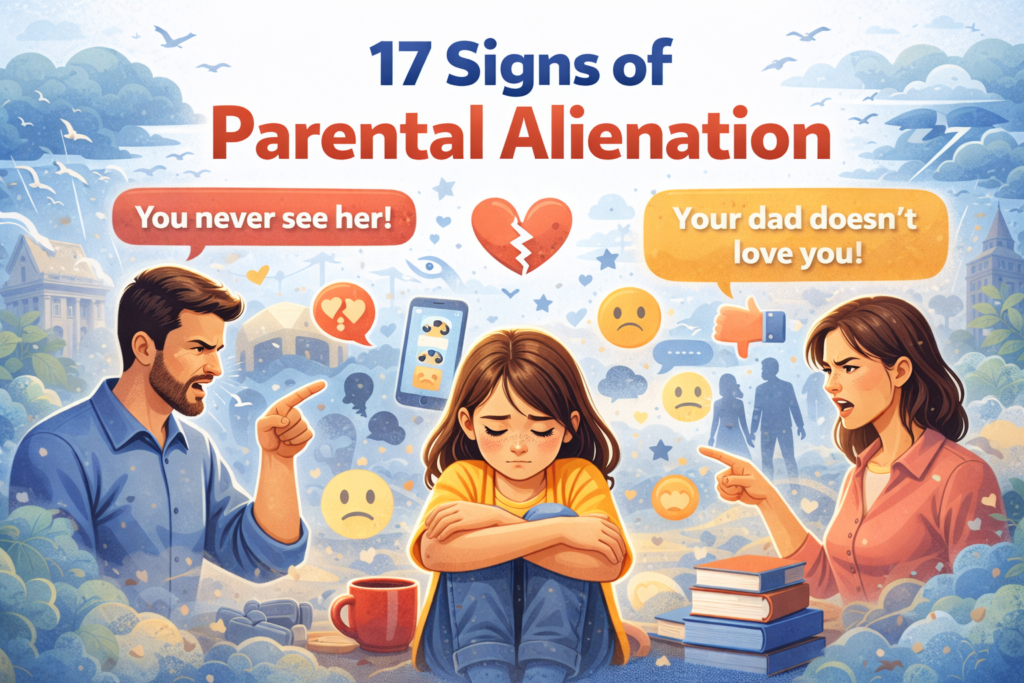
What Are the 17 Signs of Parental Alienation?
Parental alienation happens when one parent purposely makes a child reject, fear, or avoid the other parent without a good reason. This kind of behaviour is seen as emotional abuse in custody cases and is common in divorces with a lot of fighting.
- Unfairly rejecting one parent
The child suddenly and without any clear reason stops loving one parent, even though they used to have a loving relationship.
For example, a child who used to love spending weekends with dad now says, “I just don’t want to,” and won’t go. - Negative Language That Sounds Like the Parent Who Alienates You
The child talks or writes in a way that sounds just like what the alienating parent says.
For example, “You’re always so selfish,” which is what the other parent says all the time. - No guilt or regret
The child doesn’t feel bad about how they treated the rejected parent, which is a big sign that they are emotionally manipulating them. - Complaints that aren’t true or are too big
People who complain about the alienated parent either make too big of a deal out of it or don’t seem to care.
For example, not liking a parent because their house is “boring” or their food isn’t as good. - Automatic Support for the Alienator
The child always sides with the alienating parent, even when it doesn’t make sense. - No Ambivalence
Most kids feel both good and bad things about both parents. When a child has parental alienation syndrome, they see things in a one-sided way: one parent is all good and the other is all bad. - Changing the Past
The child starts to deny or downplay good memories they have of the targeted parent.
Forgetting about fun holidays or birthdays spent together, for example. - Hostility toward extended family spreads
The child doesn’t just reject the parent; they also reject that parent’s relatives, like grandparents, aunts, and uncles. - Repeating Private Adult Conversations
The child talks about things that adults or the court shouldn’t know about, which shows that the parent is using the child to get what they want. - A sudden change in how you act or feel
If a child who used to be loving suddenly becomes cold, withdrawn, or hostile, it could be an early sign of parental alienation. - Not having clear reasons for being hostile
When asked why they are mad, the child can’t give clear reasons or their reasons are not clear. - Fear or anxiety that isn’t necessary
The child is scared or very anxious about seeing or talking to the parent who was turned down, even if there is no history of abuse. - Not accepting gifts or love
The child doesn’t want gifts, cards, or hugs from the parent they don’t want to be with. Sometimes they even break these things. - Watching or Reporting Back
The child feels like they have to “spy” on the parent who is not there and tell the other parent about things that happen or things that are said. - Saying Legal or Psychological Terms
The child doesn’t understand what they mean when they say things like “You’re not following the custody order.” - Hard Limits
The child wants strict boundaries and won’t talk to anyone outside of what the court says, no matter how close they were before. - Sudden Accusations
Allegations of abuse or neglect that are not true come up, often at the same time as custody disputes.
How can you tell if someone is alienating their parents?
To find signs of parental alienation and ways to deal with it, you need to look for patterns, not just one-time events. Parents can use this checklist to look for several signs of parental alienation happening at the same time. If you see these behaviours, especially during custody battles, it might be time to get help from a family law expert or a mental health professional.
Is it abuse to keep parents away from their children?
Yes, a lot of experts and courts see parental alienation as a type of emotional abuse in custody cases. The psychological effects on the child can be very bad and last a long time. They can cause depression, anxiety, problems trusting people, and trouble making friends as an adult.
How does parental alienation hurt kids?
The effects of parental alienation on children can last for a long time. Kids might:Get low self-esteem and anxiety that lasts for a long time
Fight with feelings of guilt and being lost
Parents have loyalty problems with each other
Find it hard to trust other people and make healthy connections with them
Do poorly in school and with friends
Over time, parental alienation can have long-term effects on children that can even lead to them being cut off from both parents and extended family. This can create a cycle of family conflict and children’s suffering.
How to Show Parental Alienation in Court?
Is it possible to prove parental alienation? Yes, but you need proof. To prove parental alienation in court, keep track of the behaviours listed above with dates, direct quotes, messages, and observations from other people (like teachers and counsellors). Psychological evaluations and expert testimony could also help your case.
How to Stop Parental Alienation: What to Do Next
If you think parental alienation might be happening, here are some things to think about:Stay calm and steady. Even if your child doesn’t want to be with you, keep a loving, positive relationship with them.
Write down everything: Write down every incident, conversation, and change in your child’s behaviour.
Get Help from a Professional: A child psychologist or family therapist can look at the situation and help your child deal with emotional abuse.
Legal Help: Talk to a family law lawyer who knows a lot about child custody cases, parental alienation syndrome, and the psychology of these cases.
Learn: Find out about the problems that come up when two people are co-parenting, toxic parenting behaviour, and healthy ways to talk to each other.
Don’t retaliate: Don’t talk badly about the other parent or try to alienate them.
Questions that come up a lot:
Q: What should a parent do when their child is being alienated?
A: Be there for them, get professional help, and think about taking legal action if you need to.
Q: Is parental alienation a crime?
A: Many courts recognise parental alienation and may change custody arrangements if it can be shown.
Q: Is it possible to stop parental alienation?
A: Relationships can often be repaired with early help and therapy.
Warning:
This article is just for information and does not give legal or psychological advice. If you think your parents are alienating you, talk to a qualified professional for help and diagnosis of 17 Signs of Parental Alienation.
Mind Quizzers has quizzes that can help you test your knowledge of signs of parental alienation and find useful resources. The first step toward getting better and having better family relationships is to understand these problems.